Zanzibar is a tropical paradise located just off the coast of Tanzania in East Africa. It’s known for its stunning beaches, clear turquoise waters, and rich cultural heritage. Zanzibar is a popular destination for travellers, mainly from Europe, seeking a mix of relaxation on the beaches, diving and snorkelling in the Indian Ocean, and visiting the capital of the island, Stone Town. A lot of people just do a three- or four day stay after a safari on the mainland.
The island is steeped in history, with influences from Arab, Persian, Indian, and European cultures evident in its architecture, cuisine, and traditions. Visitors can wander (and probably get lost) through the narrow streets of Stone Town, a UNESCO World Heritage Site filled with busy, colourful marketplaces selling herbs and spices, historical landmarks, colonial buildings, and restaurants.
Why do I love Zanzibar? I feel like I’m in a different time zone; it’s like stepping back in time. The shop in the village where I live is basic and sells very little of any use to tourists, but it’s the hub of local life for the people that live there. The only thing I get there are potatoes, onions, and garlic. The eggs are left out in the African heat all day, the chicken pieces are just thrown into the freezer without any wrapping, and everything else is pretty useless. About 15 km away is a larger town with a shop that sells wine, beers, and spirits (thankfully), two chemist shops, about four supermarkets, one of which is even open 24 hours, and a couple of bakeries. Buying fruit and vegetables is an experience, too. It’s all lined up on stalls by the road; you stop on your moped or taxi, and the seller comes out and asks you what you want and hands it to you.
I love that people smile all the time; the word rush is not in anyone’s vocabulary over there, and the problems that the locals face seem not to worry them at all. I also like it because pretty much everything pushes me out of my comfort zone.
Even something as simple as getting a bus becomes complicated and involves waiting around, a lot of pushing and shoving, and getting backaches when the bus speeds over potholes. However, I get where I need to go for just thirty cents. Then, the return journey involves, even more, pushing and shoving, watching hundreds of buses go by before mine arrives, and sitting or standing between potatoes, watermelons, bags of cement, and kids who are placed on my lap to make room for adults to sit.
I guess I’m not selling it very well, am I? But that’s because I don’t want to do things the easy way. It would be way too boring to jump in an air-conditioned taxi and have a nice, slow trip to the city or the nearest town to buy groceries.
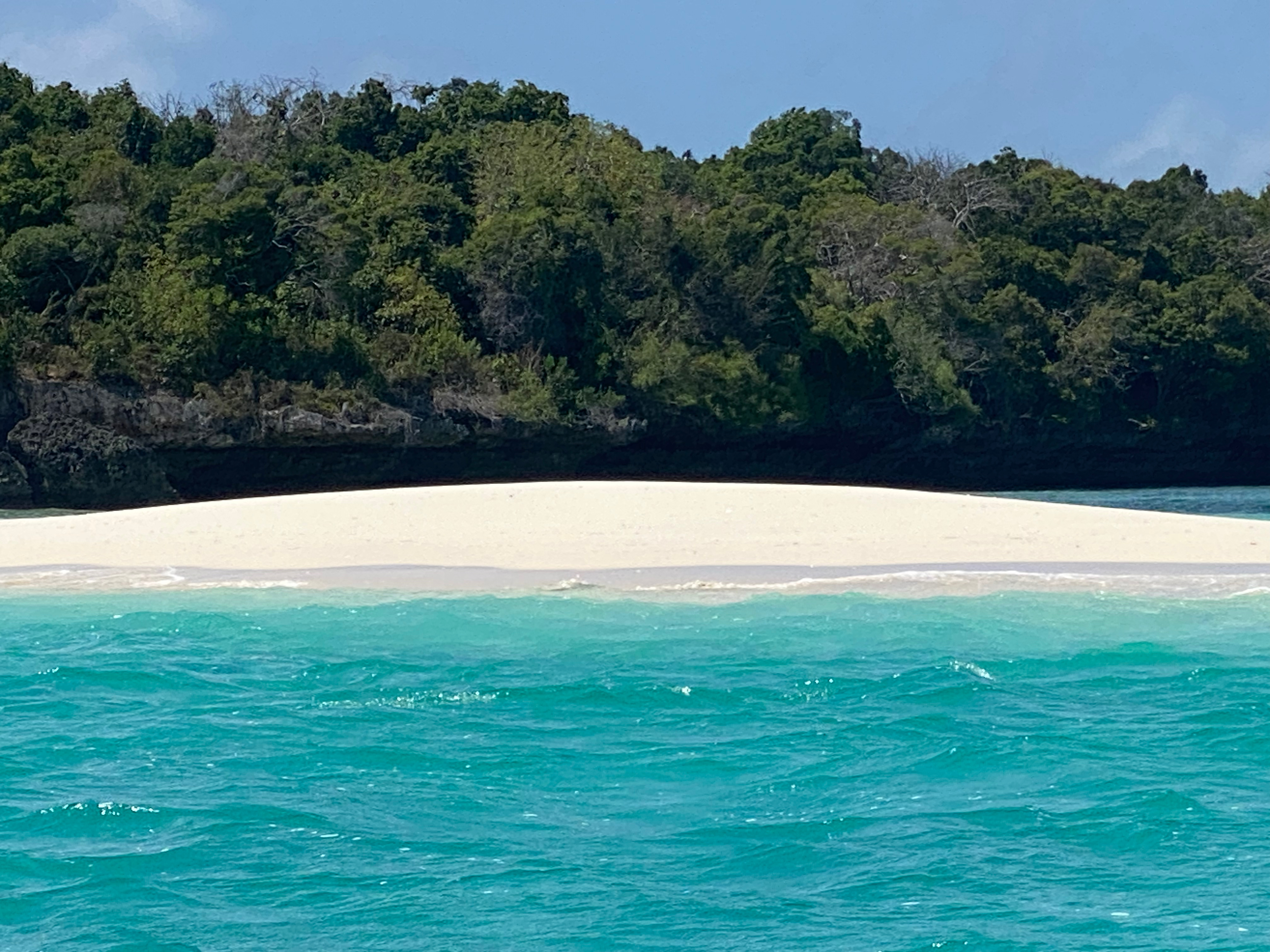
The beaches are amazing. We have tides that change the landscape every day. The full moon gives us both really low tides, where we can walk on the ocean bed and take a trip from a sandbank, and the high tides leave us wading up to our waists in water to get from one oceanfront restaurant to another, or we walk through the village and use the road side entrances, but where is the fun in that? It’s an amazing experience. During the other time of the month, the tides are less dramatic but still noticeable.
What about eating? Well, as I only cook a little other than jacket potatoes at home due to my lack of culinary skills, I make use of the restaurants on the beach or in the village. Just on the small beach where I live, we have the world-famous Rock Restaurant, a venue where you walk to at low tide and get a boat to it at high tide. We have an Italian pizzeria, a couple of local restaurants that serve us local, freshly caught fish, a chic restaurant that serves Indian/Thai fusion, and my favourite, the Wishing Tree, which serves a mix of local food, Italian, snacks, and salads. I won’t go hungry, that’s for sure. If I want to change it up, I go to the next town, where they have a modern food court and a selection of Indian, Chinese, Mexican, local, Thai, Turkish, and vegan restaurants.
The north of the island differs significantly from the south. The north is very touristy, with high-rise hotels, sunbeds lined up on the beach, hundreds of restaurants, touts trying to get you in, and beach boys selling excursions, beach towels, and coconuts on the beach.
The south of the island (where I am) is much more African. The hotels are all smaller, the beach boys fewer, and the nightlife is nonexistent.
For any history buffs, read here.
(I googled this last bit, as honestly, I knew there was a British connection but wasn’t sure what it was.)
The island has been inhabited for thousands of years, with evidence of early settlements dating back to the 6th century. Zanzibar’s location along the East African coast made it a hub for trade between Africa, the Middle East, and Asia.
One of the most significant influences on Zanzibar’s history was the arrival of Arab traders in the 8th century. They brought with them Islam, which became the dominant religion on the island. The Sultanate of Zanzibar was established in the 17th century and ruled over a diverse population that included Arabs, Africans, Indians, and Europeans.
The languages spoken in Zanzibar reflect this diversity. Swahili is the most widely spoken language and serves as a lingua franca for communication between different ethnic groups. Arabic is also commonly spoken, particularly among the Arab community. English and French.
The history of British rule in Zanzibar began in the late 19th century, when the British established a protectorate over the island in 1890. This came after years of rivalry between European powers for control over the lucrative trade routes and resources in East Africa.
Under British rule, Zanzibar saw significant changes in its political and economic landscape. The British implemented various reforms aimed at modernising the island’s infrastructure, economy, and governance. They also played a key role in abolishing the slave trade, which had long been a major source of wealth for the Arab rulers of Zanzibar.
However, British rule was not without its challenges. The local population often resisted colonial authority, leading to several uprisings and revolts against British rule. Additionally, tensions between different ethnic and religious groups on the island sometimes erupted into violence.
British war in Zanzibar (Also googled, sorry)
The British war in Zanzibar, also known as the Anglo-Zanzibar War, was a brief conflict that took place on August 27, 1896. It is considered to be the shortest war in history, lasting only 38 minutes.
The war was sparked by a succession dispute following the death of the Sultan of Zanzibar. The British supported one candidate for the throne, while another candidate had already been installed by the local Arab elite. When the British demands for their preferred candidate to be recognized were not met, they issued an ultimatum to the Sultan.
When the ultimatum expired without compliance, British warships bombarded the Sultan’s palace and other key locations in Zanzibar. The Sultan’s forces were quickly overwhelmed, and he was forced to flee into exile.
The outcome of the war solidified British control over Zanzibar and marked a turning point in their imperial presence in East Africa. The conflict highlighted the power disparity between European
In 1963, Zanzibar gained independence from Britain and merged with Tanganyika to form the United Republic of Tanzania.
 Gwen Courtman Author